
There is a beautiful ceremony that accompanies the Bris circumcision procedure (Bris Milah). Relatives and friends may participate in the Bris circumcision ceremony by carrying the baby into the room where the Bris circumcision will take place.
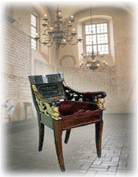
The Bris ceremony continues with the baby being placed on the Chair of the Prophet Elijah whose spiritual presence is present at the circumcision (Bris milah) of every Jewish child. It is customary to stand during the entire Bris circumcision ceremony in honor of the Prophet Elijah.
The highest honor belongs to the "Sandak", the one who holds the baby during the actual Bris circumcision procedure performed by the mohel.
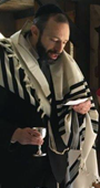
The father then says a short blessing.
The Bris circumcision ceremony continues with the recital of blessings and with the child being given his Jewish (Hebrew) name.
The Bis circumcision ceremony concludes with a prayer said for the well being of the newborn baby. Mazal Tov!
Please feel free to contact Rabbi Boruch Mozes for a comprehensive explanation of the beautiful Bris circumcision ceremony.
Bris Circumcision Ceremony - Honors
There are various stages in the Bris ceremony where friends and relatives may be given roles so as to be included in the Bris ceremony.
Kvatter and Kvatterin (G-d father and G-d mother): This honor goes to a husband-wife team, who carry the newborn baby into the area where the Bris circumcision ceremony will take place.
Chair of Elijah: This honor is given to a man honored with placing the baby on the chair of Elijah whose spiritual presence is present at the Bris circumcision of every Jewish child.
Sandak: This is the highest honor of the Bris ceremony. The Sandak is the one who holds the baby during the actual circumcision procedure.
Blessings and Naming: This honor is very often presented to a Rabbi or recited by the Mohel. The person recites the blessings and presents the child with his Jewish name. This honor can be split into two, where one person recites the blessings and the other presents the child with his Jewish name.
Standing Sandak:The Standing Sandak holds the baby during the blessings and the naming ceremony, which immediately follow the actual circumcision procedure. This honor can be split into two, where one person holds the baby during the blessings and a second individual holds the baby during the naming ceremony.
Please note that the above description of the Bris circumcision ceremony and honors is the traditional ceremony often done by Jewish people of Ashkenazi descent. Jewish people of Sephardic origin often have a slightly different Brit circumcision ceremony.